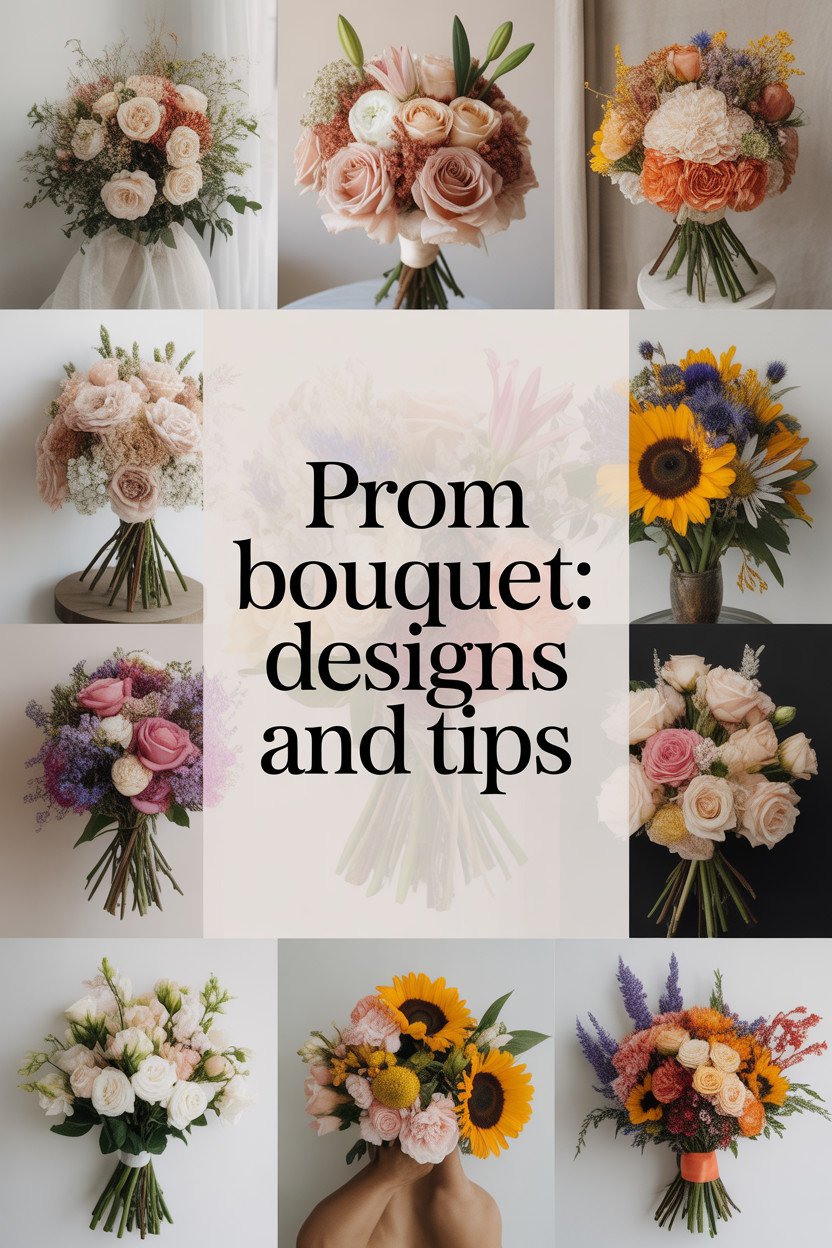
Prom bouquets set the tone for your whole prom look and can make your outfit feel more complete. Pick a bouquet that matches your dress, personal style, and the mood you want—classic, playful, or bold—to ensure it adds to your confidence and photos.
You will learn how different bouquet styles, flower choices, colors, and personal touches affect the final result. The article also covers ways to keep your flowers fresh through the night and steps to preserve them afterward so your memories last longer.
Types of Prom Bouquets
You will learn which bouquet fits your dress, wrist size, and prom style. Focus on shape, weight, and how you will carry it.
Hand-Tied Arrangements
Hand-tied bouquets tie stems in a visible spiral or wrap. You can choose a tight round shape or a looser, garden-style look. This type sits comfortably in your hand and works well if you plan to take photos while holding the bouquet.
Pick blooms with similar stem lengths so the bouquet looks balanced. Add greenery like eucalyptus or Italian ruscus for texture without extra weight. Wrap the stems with ribbon or satin tape to match your dress and to protect your hand.
Hand-tied bouquets are lighter than many alternatives, so they suit long dances or photos that last. If you want a natural, modern look with easy handling, this style fits most prom needs.
Cascading Bouquet Styles
Cascading bouquets flow downward like a waterfall. They often use trailing flowers such as orchids, ivy, or stephanotis to create a dramatic line. This style pairs well with strapless or simple-back dresses because it emphasizes vertical lines.
You must consider weight and length: long stems and extra greenery add bulk. Ask your florist to secure heavy blooms with wire and to balance the top and bottom so the bouquet won’t pull forward.
Cascading bouquets create a formal, elegant look for photos and entrances. Choose sturdy flowers like roses or calla lilies to keep the shape through the night.
Posy Bouquets
Posy bouquets are small, round, and easy to carry in one hand. They typically measure 6–8 inches across and use short stems. This compact size makes them ideal if you plan to dance a lot or wear a corsage on your wrist.
Select firm flowers such as ranunculus, spray roses, or carnations for a neat, long-lasting look. Wrap the stems tightly and finish with a neat ribbon or decorative brooch to add polish.
Posy bouquets are lightweight and low-maintenance. You get a clean, classic style that keeps attention on your dress and face without overwhelming your outfit.
Choosing Flowers and Colors
Pick flowers that match your dress fabric, corsage style, and budget. Choose colors that either match the main dress color, complement it, or provide a clear contrast that still looks balanced.
Popular Flower Selections
Roses are classic for prom. They hold shape, come in many colors, and pair well with greenery. Choose spray roses if you want a smaller, delicate look; long-stem roses suit bold bouquets.
Peonies give a soft, romantic feel but cost more and bruise easily. Choose them if your prom is in late spring and you can protect them from heat. Ranunculus and gardenias add texture and look elegant in close-up photos.
Orchids offer a modern, sleek look and last well in wrist corsages. Baby’s breath is an affordable filler that adds volume but can look dated if overused. Ask your florist to show live samples so you can test scent, size, and durability.
Color Coordination with Prom Attire
Match your bouquet to your dress color, shoes, or jewelry to create a unified look. For a navy dress, choose blush roses with silver accents for a refined contrast. For a black dress, bright red roses or white calla lilies create a sharp, formal statement.
If your dress has a pattern, pick one color from the pattern and use it as the bouquet’s main color. For metallic dresses, use warm florals like peach or champagne tones to balance the shine. If you want a bold pop, use a complementary color—purple with yellow, or teal with coral—while keeping greenery minimal.
Consider skin tone and hair color. Warm skin tones pair well with peach and coral. Cool skin tones suit blue, lavender, and white. Test the combination under natural light if possible.
Seasonal Flower Considerations
Spring prom favors peonies, tulips, and ranunculus. These look lush but may be pricier due to demand. Reserve early to ensure availability and avoid last-minute substitutions.
Summer offers roses, dahlias, and sunflowers. Dahlias provide bold shapes but can be sensitive to heat; keep them hydrated until the event. Sunflowers fit casual or outdoor proms but can overpower delicate dresses.
Fall brings chrysanthemums, marigolds, and spray roses in deep tones. These last well and handle cooler temperatures. Winter choices include amaryllis, paperwhites, and carnations, which are hardy and often more affordable during holidays. Ask your florist about local blooms to reduce cost and improve freshness.
Customization and Personalization
You can make a prom bouquet reflect personal style, school colors, and sentimental details. Focus on small, tangible choices—accessories, arrangement methods, and wrapping—to create a bouquet that feels unique and wearable.
Incorporating Accessories and Keepsakes
Add items that matter to the wearer, such as a small locket, charm, or a fabric swatch from a parent’s garment. Secure metal charms with florist wire wrapped tightly and hidden under floral tape. For fragile keepsakes, place them in a clear plastic pouch before tucking into the stems.
Consider practical accessories: a wristlet bracelet base if the bouquet will be worn, or a ribbon loop to slip over the wrist. Use pins with flat heads to attach corsage-style pieces; avoid safety pins that can bend or snag fabric. If you include LEDs or battery lights, test battery life and hide wiring inside floral foam or the stem wrap.
Balance weight so the bouquet stays comfortable. Distribute heavier keepsakes evenly, and keep the total weight under about 1–1.5 pounds for hand-held bouquets. Label any sentimental item with a small tag if tracking is needed for after-prom return.
Floral Arrangement Techniques
Start with a focal flower and build around it using odd-number groupings (3, 5, 7) for visual balance. Use shorter stems at the center and gradually longer stems toward the outer edge to form a dome shape that rests well in the hand.
Use floral tape and wire to strengthen delicate stems like peonies or lilies. Wrap stems in damp floral foam when preparing wrist bouquets to keep flowers fresh for 6–10 hours. If you want a cascading look, bind the top stems tightly and allow draping greenery like ivy or eucalyptus to hang freely.
Pay attention to color blocking. Place accent blooms that repeat your dress color next to contrasting blooms to make both colors pop. Finish with a grip-friendly stem wrap—linen or satin—for comfort and a clean look.
Personalized Wrapping and Ribbons
Choose ribbon material that matches the outfit texture—satin for formal gowns, burlap or lace for vintage styles. Cut ribbon lengths long enough to trail 6–12 inches if you want a dramatic tail; keep tails shorter (3–6 inches) for a neater look.
Monogram tags, engraved sliders, or printed ribbons add names or dates. Sew or glue a small tag onto the ribbon, or use a ribbon printer for short text. For secure finishes, use a hidden pin or a dab of hot glue under the knot; test glue on a scrap to avoid staining.
Consider double-layer wrapping: an inner tape layer for hold, outer decorative ribbon for appearance. Tuck ribbon ends under the wrap and secure with a bead or decorative pin to prevent fraying and keep the bouquet looking polished all night.
Preservation and Aftercare
Keep stems trimmed, water fresh, and flowers cool. Choose a preservation method based on whether you want to keep the bouquet alive a few days or turn it into a lasting display.
Keeping Your Bouquet Fresh
Change the water every 24 hours to prevent bacteria that block stems. Use a clean vase and refill with room-temperature water mixed with a floral preservative or a teaspoon of sugar and a few drops of bleach. Recut stems at a 45° angle under water by 1–2 cm every day to improve water uptake.
Remove wilting leaves and spent blooms immediately to stop decay from spreading. Keep the bouquet away from heat sources, direct sunlight, ripening fruit, and drafts. Store the bouquet in a cool spot or the fridge (not full cold rooms) overnight to extend freshness.
Drying and Display Methods
Choose air-drying for a simple, low-cost method. Tie small bunches with twine and hang them upside down in a dry, dark, well-ventilated room for 2–4 weeks. This preserves shape but may fade colors.
Use silica gel for faster, color-preserving results. Bury blooms in silica in an airtight container for 2–7 days, then brush off residue gently. Pressing works for flat displays: place petals between absorbent paper and weight them for 2–3 weeks.
After drying, spray a light coat of clear acrylic or hairspray to reduce shedding. Mount dried flowers on a foam backing or in a shadow box, and avoid humid rooms to prevent mold and rehydration.